

· 6 min read
How to Run a Weekly Badminton or Pickleball Club
A practical guide to organizing regular court sessions. From booking courts to managing rotations, here's everything you need to run smooth weekly games.
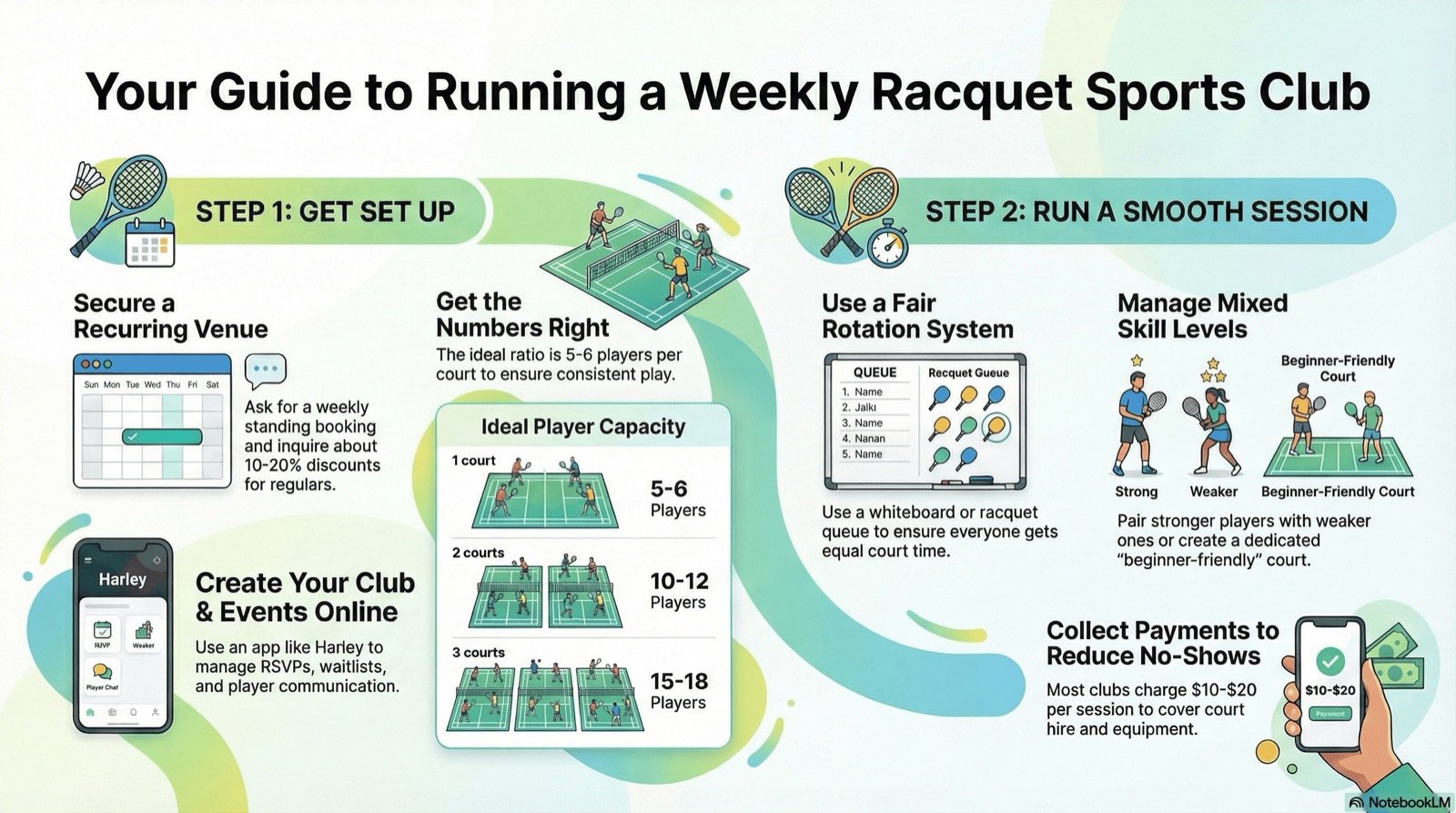
Running a weekly badminton or pickleball club is one of the most rewarding ways to stay active and build a community around racquet sports. A well-organized session becomes the highlight of your players’ week—something they look forward to and prioritize.
This guide covers the practical side of running regular court sessions, from securing your venue to managing player rotations on game day.
Finding the Right Venue
Your venue is the foundation of your club. For badminton and pickleball, you’ll typically be looking at:
Indoor options:
- Community centres and recreation facilities
- School gymnasiums (often available evenings/weekends)
- Dedicated badminton or sports centres
- Church halls with high ceilings (for badminton)
Outdoor options (pickleball):
- Public pickleball courts
- Tennis courts with temporary pickleball lines
- Council-run facilities
What to look for:
- Correct ceiling height (badminton needs 7-9m minimum)
- Good lighting without glare
- Non-slip flooring
- Multiple courts if possible
- Parking and accessibility
- Storage for nets and equipment
Booking Tips
Try to secure a standing weekly booking:
- Contact the facility manager directly
- Explain you want a recurring booking (same time each week)
- Ask about discounts for regular bookings—many offer 10-20% off
- Get your reservation confirmed in writing
- Clarify the cancellation policy for public holidays
A consistent time slot helps players build your session into their routine.
Setting Up Your Club in Harley
Once you’ve locked in your venue, set up your club in Harley. You’ll need to be on the Captain tier to create clubs and events.
Creating Your Club
- Open Harley and tap “Create Club”
- Select badminton or pickleball as your sport
- Choose a clear name (e.g., “Tuesday Night Badminton - Southbank”)
- Write a description covering:
- Skill level (beginner, intermediate, all levels)
- What to bring (racquet, water, non-marking shoes)
- Session format and vibe
- Set your location so nearby players can find you
Creating Events
For each week’s session, create a new event:
- Go to your club and tap “Create Event”
- Set the date, time, and duration (most sessions run 1.5-2 hours)
- Set capacity based on your courts (5-6 players per court works well)
- Add the session fee if applicable
- Include details like parking instructions and what to bring
Get into a rhythm of creating next week’s event right after your current session. This gives players time to RSVP and plan ahead.
Getting the Numbers Right
The magic number for badminton and pickleball is 5-6 players per court. This keeps rotation moving without too much waiting:
| Courts | Ideal Players | Max Players |
|---|---|---|
| 1 court | 5-6 | 8 |
| 2 courts | 10-12 | 14 |
| 3 courts | 15-18 | 20 |
With fewer players, you get more games but less variety in partners. With more, wait times become frustrating.
Managing the Waitlist
When your event fills up, Harley creates a waitlist automatically. Players can join with one tap, and when someone cancels, the next person gets notified.
Reducing No-Shows
No-shows throw off your numbers. Minimize them by:
- Collecting payment before the session
- Setting a clear cancellation deadline (24 hours is standard)
- Having a strike policy for repeat offenders
- Making it easy to cancel in the app
Collecting Payments
Most clubs charge $10-20 per session to cover court hire and shuttlecocks/balls.
Pricing It Right
Calculate your costs:
- Court hire ÷ expected players
- Shuttlecocks or pickleballs (they wear out)
- Small buffer for equipment replacement
How to Collect
You’ll need to collect payments outside Harley for now:
- Cash: Collect on arrival
- PayID/bank transfer: Request payment before or after
Many hosts ask for payment when players arrive. Others request it in advance to reduce no-shows.
Tracking in Harley
From your event page, go to the members list and mark each player as paid or unpaid. This helps you:
- See who still owes at a glance
- Keep records for each session
- Follow up with players who haven’t paid
Running a Smooth Session
Game day is where it all comes together.
Before Players Arrive
Get there 15-20 minutes early to:
- Set up nets (if not permanent)
- Lay out shuttlecocks/balls
- Turn on lights and check court conditions
- Open the Harley app ready for check-in
Check-In
Keep it simple:
- Mark players as arrived in Harley
- Collect any outstanding payments
- Point new players to where they can warm up
Equipment
You should provide:
- Shuttlecocks or pickleballs (have plenty—they break/wear out)
- Spare racquets for newcomers or forgetful players
- First aid kit
Players bring:
- Their own racquet/paddle
- Non-marking indoor shoes
- Water bottle
- Towel
Managing Rotations
Good rotation systems keep everyone playing and prevent the same people dominating courts.
Popular Rotation Systems
King/Queen of the Court:
- Winners stay on, losers rotate off
- Simple and self-managing
- Works best when skill levels are similar
Round Robin with Paddle/Racquet Queue:
- Players put their racquet in a queue
- Next 4 racquets in line play the next game
- Fair and removes politics from court allocation
Challenge Court System:
- Court 1 is the “challenge court”
- Winners move up, losers move down
- Creates natural skill-based groupings
Timed Rotation:
- Set a timer (10-15 minutes per game)
- When it goes off, everyone rotates regardless of score
- Guarantees equal playing time
Tips for Smooth Rotations
- Use a whiteboard or scoreboard to track who’s up next
- Keep games short (play to 11 or 15, not 21)
- If someone’s been waiting too long, bump them up the queue
- Mix up partners between games so everyone plays with everyone
Handling Mixed Skill Levels
Most social clubs have a mix of beginners and experienced players.
Make it work by:
- Pairing stronger players with weaker ones for doubles
- Having a “beginner-friendly” court for newer players
- Rotating partners frequently so no one’s stuck with a mismatch
- Setting expectations in your event description (social vs. competitive)
If demand is there, consider running separate beginner and advanced sessions on different nights.
Common Challenges
Equipment Breakage
Shuttlecocks and pickleballs don’t last forever. Budget for replacements and have spares on hand. For badminton, expect to go through several shuttlecocks per session.
The Player Who Won’t Rotate
Some players try to stay on court longer than their turn. Handle it by:
- Having a clear, visible rotation system
- Gently reminding them when it’s time to rotate
- If it continues, a private word about fairness
Skill Mismatches
If a player is significantly stronger or weaker than the group:
- For stronger players: suggest a more competitive session if available
- For beginners: pair them with patient, encouraging players
- Consider separate skill-level sessions if this becomes common
Injuries
Badminton and pickleball are generally low-impact, but rolled ankles and muscle strains happen:
- Keep a first aid kit handy
- Know where the nearest hospital/medical centre is
- Don’t let players “push through” obvious injuries
Growing Your Club
If your sessions fill up consistently, you have options:
Add another session:
- Different night of the week
- Separate beginner and advanced nights
Book more courts:
- Scales your capacity
- May unlock venue discounts for larger bookings
Get help:
- Ask reliable regulars to help with setup or check-in
- Consider a co-host who can run sessions when you’re away
Don’t grow too fast. It’s better to have a tight-knit group with a waitlist than an overcrowded session where no one gets enough court time.
Weekly Checklist
Before the season:
- Secure your court booking
- Create your club in Harley
- Buy shuttlecocks/balls and spare equipment
- Write a clear event description
Before each session:
- Create next week’s event
- Check RSVPs and waitlist
- Confirm venue isn’t closed for holidays
- Pack equipment
On game day:
- Arrive early to set up
- Check in players and collect payments
- Run rotations fairly
- Pack up and leave the venue tidy
After:
- Mark attendance and payments in Harley
- Note any issues to address
- Create next week’s event if you haven’t already
Getting Started
Running a weekly badminton or pickleball club takes some upfront effort, but once you find your rhythm, it runs itself. The key is consistency—same time, same place, same format.
Start small. Book one court for a month, invite friends and friends-of-friends, and see how it goes. You can always add more courts or sessions later.
With Harley managing your RSVPs and player tracking, you can focus on what matters: good games with good people, week after week.